HVAC Service Orlando FL
Heating, cooling, HVAC repair, installation and maintenance for Orlando homes and businesses.
- Heating & Cooling
- Repairs & Maintenance
- HVAC Installation
- Orlando Area Service
Complete HVAC Services in Orlando, FL
Whether the problem is a system that will not cool, a room that never keeps up, or equipment approaching the end of its life, start with the service that matches what you are dealing with.
AC Repair
Diagnosis for systems blowing warm air, short cycling, freezing or shutting down mid-cycle.
Learn more about ac repairHVAC Repair
Whole-system repair covering air handlers, controls, condensate, heat side and distribution.
Learn more about hvac repairAC Installation
Air conditioner replacement with sizing, SEER2 and duct compatibility addressed up front.
Learn more about ac installationHVAC Installation
Matched indoor and outdoor system replacement, commissioning and permitted work.
Learn more about hvac installationHVAC Maintenance
Drains, coils, airflow and electrical condition — the items that actually fail here.
Learn more about hvac maintenanceHeating Repair
Heat pumps, electric strip heat and furnaces during Central Florida cold snaps.
Learn more about heating repairHeat Pump Repair
Reversing valve, defrost, auxiliary heat and refrigerant diagnostics.
Learn more about heat pump repairHeat Pump Installation
Heat pump replacement sized for cooling load and configured for efficient backup heat.
Learn more about heat pump installationCommercial HVAC
Light commercial service for offices, retail suites and professional spaces.
Learn more about commercial hvacIndoor Air Quality
Filtration, humidity control, ventilation and duct condition without the hype.
Learn more about indoor air qualityDuctwork
Leaking attic ducts, hot rooms, undersized returns and airflow correction.
Learn more about ductworkThermostat Installation
Smart and programmable controls configured correctly for your equipment.
Learn more about thermostat installation
AC Repair in Orlando
Most Orlando cooling complaints fall into a short list of patterns, and each points at a different part of the system. Knowing which pattern you are seeing shortens the diagnosis considerably.
- AC blowing warm air
- Weak airflow
- Unit running constantly
- AC short cycling
- Frozen evaporator coils
- Clogged drain lines
- Thermostat issues
- Unusual noises
- High indoor humidity
- System not turning on
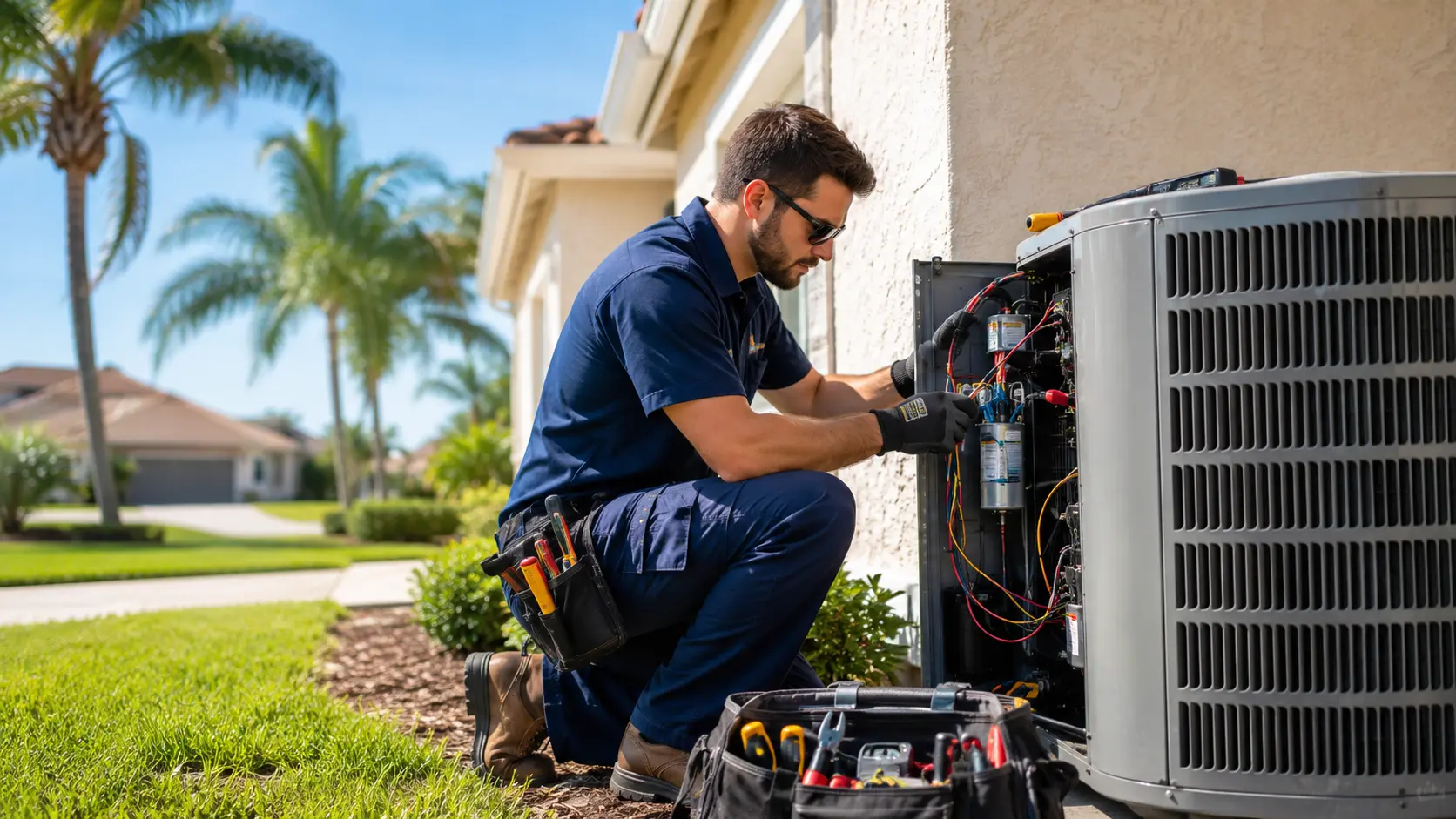
A proper visit measures temperature split, airflow and electrical values before any part is replaced — adding refrigerant to a system that is leaking, for example, treats the symptom and not the fault.
What Is Your HVAC System Doing?
Select the symptom that best matches what you are seeing. You will get the causes that most often produce it and where to go next.
Choose the symptom that best matches what your system is doing.
HVAC & AC Installation in Orlando
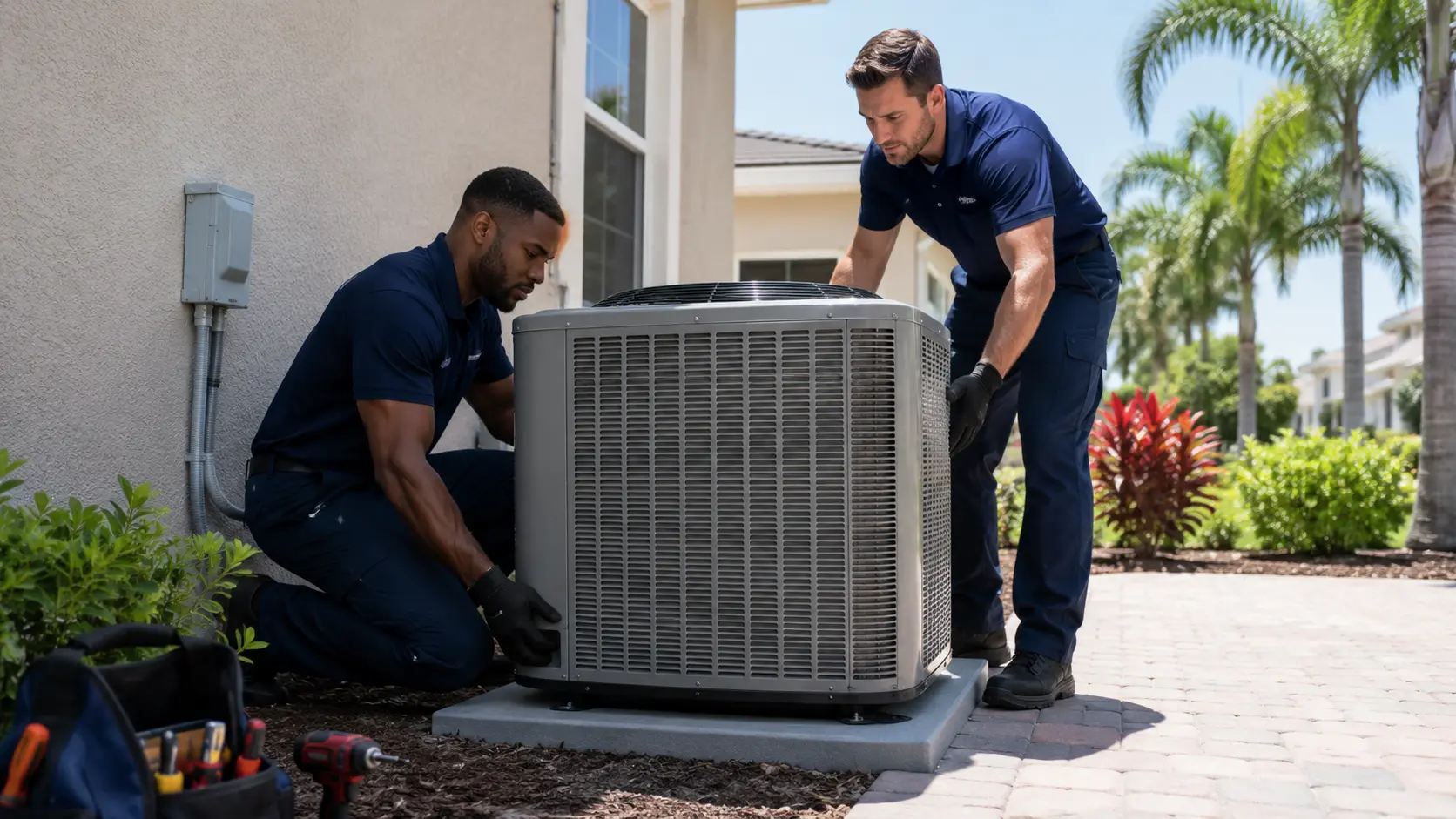
Replacing a system is the one opportunity to correct the things that limit comfort year after year: equipment sized for the house as it exists today, duct and return capacity that can carry the airflow, and controls configured for the equipment actually installed.
Sizing deserves particular attention in Florida. An oversized unit cools quickly, shuts off, and leaves humidity behind — which is why a house can read 74°F and still feel damp. Efficiency ratings matter too, because Orlando systems accumulate run hours far faster than equipment in cooler climates.
Heat pumps and straight-cool systems are both appropriate here, and the right choice depends on your existing air handler, wiring, thermostat and how you use the house. Ductwork condition and thermostat compatibility should be settled during planning, not discovered on installation day.
Orlando HVAC Cost Estimator
A planning tool, not a quote. Tell it what you are dealing with and it will tell you what kind of project it typically is and which factors will drive the price.
Planning category
Moderate-complexity service
Expect diagnosis followed by component-level work, or a defined project such as thermostat or air quality equipment installation. Access, equipment condition and part selection drive the range.
What actually determines your price
- Diagnosis findings — what actually failed, and whether the cause is a single component or a system-level problem
- Equipment type, capacity and efficiency level for replacement work
- Parts required and their availability, including whether the component is still supported
- Access to the equipment: attic, closet, rooftop, tight side yards and multi-story locations all add labor time
- Condition of ductwork, returns and condensate routing, and whether corrections are included
- Electrical requirements such as disconnects, breaker sizing and circuit condition
- Refrigerant type and whether the system uses a discontinued refrigerant
- Permit and inspection requirements for equipment changeouts
- Scope: a targeted repair, a full replacement, or a project that also corrects distribution problems
This estimator is for general planning only and is not a quote. Actual pricing depends on diagnosis, equipment, access, system size, parts, labor and project scope.
HVAC Maintenance for Orlando Homes
Maintenance here is not the same job as maintenance up north. A cooling season that runs from roughly March into November means far more compressor hours, far more condensate, and far more opportunity for a small problem to escalate during a stretch of high heat.
- Condensate drain maintenance: Warm, humid conditions grow biological slime in drain lines; clogs shut systems down and cause ceiling damage.
- Filters and airflow: Restricted airflow reduces capacity, raises energy use and freezes coils.
- Coil condition: Indoor and outdoor coil cleanliness determines how much heat the system can actually move.
- Refrigerant system inspection: Pressures and temperatures checked by qualified technicians; a drifting charge means a leak to find.
- Thermostat operation: Correct configuration and staging, particularly on heat pumps with electric backup heat.
- Outdoor condenser condition: Clearance, debris, electrical terminations and corrosion from Florida humidity and storms.
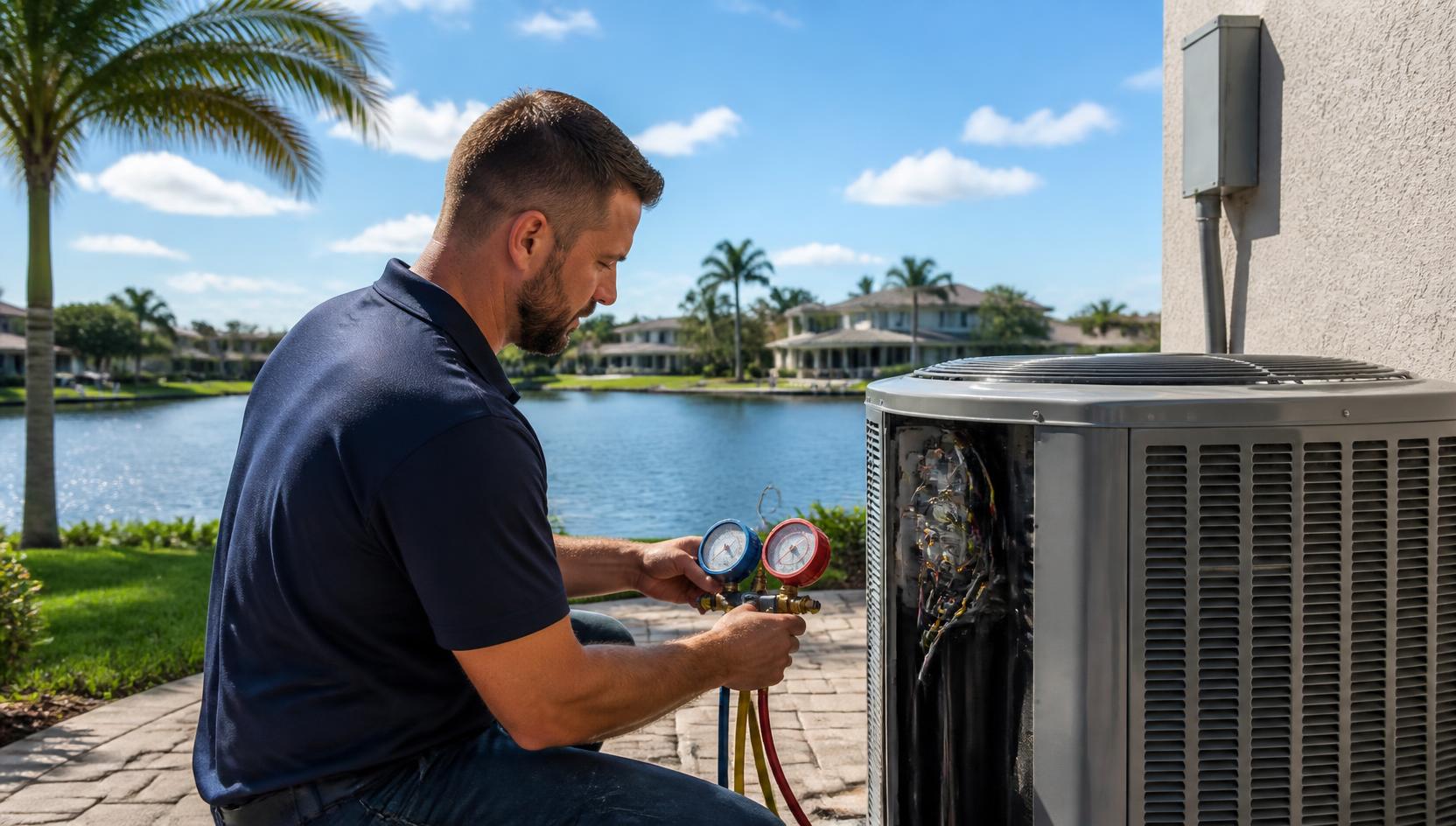
Why HVAC Systems Work So Hard in Orlando
Orlando's cooling season is long enough that "summer maintenance" is really most of the year. Systems here commonly run daily from March through November, with only short stretches in winter where cooling stops entirely. That run time is the single biggest reason equipment reaches end of life sooner in Central Florida than the national averages suggest.
Humidity does the second half of the work. An air conditioner has to remove both heat and moisture, and in a climate where outdoor dew points sit in the 70s for months, a large share of the system's capacity goes into moisture removal alone. That is why run time — not thermostat setting — determines whether your house feels comfortable.
All that moisture has to go somewhere. A residential system can produce several gallons of condensate a day here, which is why drain lines, traps, pans and float switches matter far more locally than they do in drier regions.
Outdoor equipment lives in a demanding environment: intense sun, daily afternoon storms, wind-driven debris, lawn clippings and dense landscaping. A condenser coil packed with organic matter cannot reject heat properly, which raises operating pressures and shortens compressor and capacitor life.
Attics change the arithmetic too. Where the air handler and ducts sit in an attic that exceeds 120°F, duct leakage and poor insulation are not marginal losses — they are a direct, continuous drain on capacity, and return-side leaks pull that superheated, humid air straight into the system.
Heating demand is modest by comparison, which is why heat pumps suit this climate: the same equipment handles the long cooling season and the handful of genuinely cold nights, with electric backup heat available for the coldest hours.
HVAC Service Across Orlando and Nearby Communities
Housing in the Orlando area varies enormously — 1920s bungalows in College Park, high-rise condos downtown, mid-century ranches in Maitland, planned-community homes in Baldwin Park and Lake Nona, and lakefront properties in Windermere. Each brings different equipment configurations, access constraints and comfort problems, so each service area page covers what is actually typical there.
What You Can Expect When Requesting HVAC Service
Clear Communication
You will be told what was found, what it means, and what the options are — in plain language, before work proceeds.
Problem-Focused Evaluation
Diagnosis before parts. Measurements drive the conclusion rather than guesswork about likely components.
Repair & Replacement Options
Where both are reasonable, you get the comparison rather than a single recommendation.
Straightforward Next Steps
What needs doing now, what can wait, and what to watch for — written down rather than implied.
Respect for Your Home
Work areas protected and left clean, with access arranged around your schedule where possible.
Orlando Area Coverage
Service across Orlando and nearby communities from Downtown and Winter Park to Lake Nona, Windermere and Kissimmee.
Orlando HVAC Questions
Answers to what Orlando homeowners ask most. For more, see the full HVAC FAQ or the Orlando HVAC cost guide.
How much does HVAC service cost in Orlando?
How often should HVAC systems be serviced in Florida?
Why is my AC running but not cooling?
Why does my Orlando home feel humid even when the AC is running?
How long do AC systems typically last in Florida?
Should I repair or replace my HVAC system?
What causes an AC drain line to clog?
What is the difference between AC repair and HVAC repair?
Are heat pumps a good option in Orlando?
Why does my AC keep turning on and off?
What size HVAC system does my home need?
What causes weak airflow from AC vents?
Why is there water near my indoor AC unit?
How can I improve HVAC efficiency?
Need HVAC Service in Orlando?
Tell us what your heating or cooling system is doing and request service.